
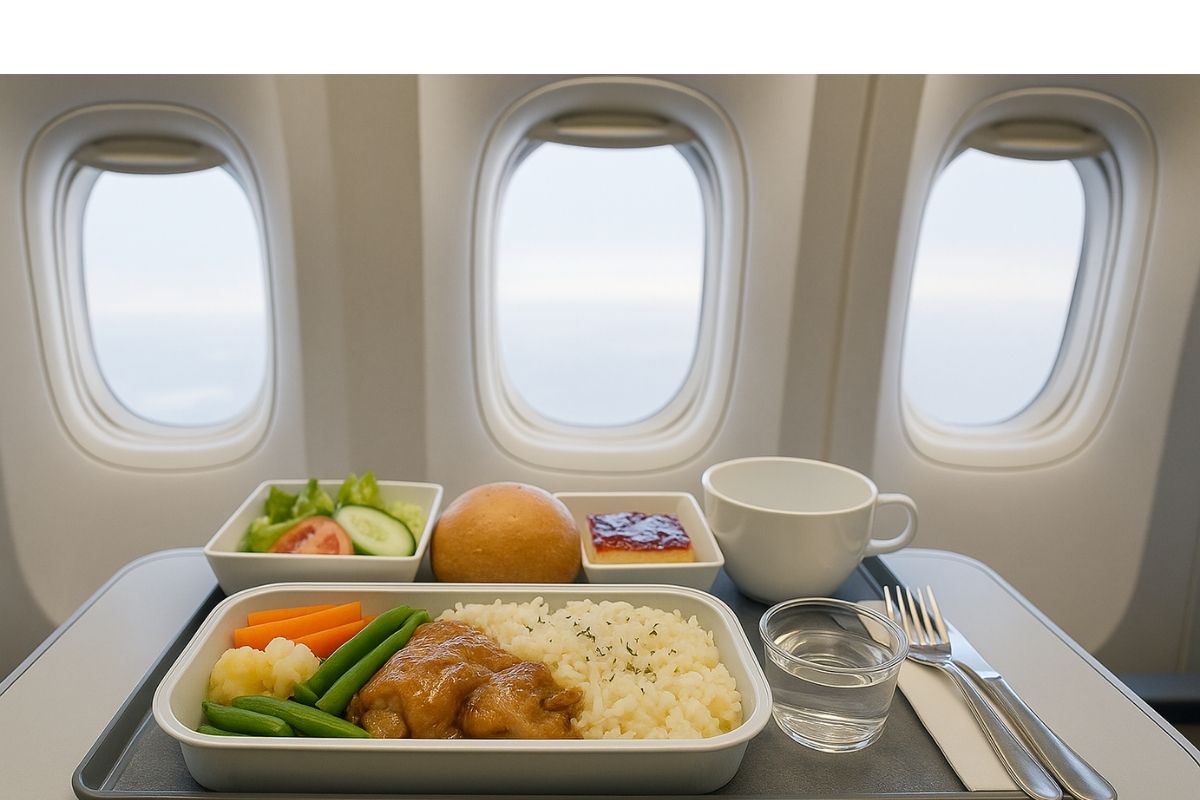
Airplane meals have a strange reputation, and many travelers ask the same question: why does airplane food taste bad? The answer isn’t just about bland recipes. It’s rooted in physics, biology, and the unique environment inside an aircraft cabin. Here’s the real science behind why your favorite dish suddenly tastes like cardboard at 35,000 feet.
Why does airplane food taste bad according to science
One of the main explanations for why does airplane food taste bad is that your taste buds and sense of smell don’t work normally during a flight. Low humidity, loud background noise, and pressurization all reduce your ability to detect sweetness and saltiness. Even perfectly seasoned meals can taste flat.
How altitude affects flavor perception
At cruising altitude, the cabin is pressurized to about 6,000–8,000 feet. This environment changes your sensory perception dramatically.
Dry cabin air dulls your taste buds
Humidity drops to as low as 10–15%. This dries out your nose and reduces your sense of smell—responsible for up to 80% of flavor perception. External link: https://www.livescience.com
Cabin pressure alters sweet and salty taste
Research shows that sweetness and saltiness drop by up to 30% in flight. Airlines often compensate by oversalting food, which can make it taste strange on the ground.
Noise impacts your brain’s taste processing
Loud cabin noise—typically 75–85 decibels—affects the brain’s ability to focus on subtle flavors, making food seem more bland. External link: https://www.nasa.gov
(Internal link: insert related OddlyFacts article here)
The real reasons why does airplane food taste bad
Even before food reaches the plane, several factors affect quality:
Meals are cooked hours in advance
Airline kitchens prepare food on land, then chill it, pack it, and reheat it mid-flight. Many ingredients don’t survive this process well.
Reheating changes texture
Steam ovens on planes cannot brown or crisp food. Anything meant to be crunchy ends up soft.
Safety regulations limit ingredients
Certain fresh ingredients, spices, and sauces cannot be used due to safety and storage restrictions.
7 Surprising Facts About Why Does Airplane Food Taste Bad
- At altitude, your sense of smell decreases by up to 40%, making food taste weaker.
- Umami-rich ingredients like tomatoes and mushrooms taste better in the air, which is why many airline meals use them.
- Cabin noise can reduce sweetness detection, altering how your brain perceives dessert.
- Airlines spend millions researching flavor profiles that survive reheating and altitude changes.
- Tomato juice tastes more flavorful at 35,000 feet because your brain boosts umami perception.
- Low humidity causes mild dehydration, making your mouth less responsive to flavor compounds.
- Chefs use stronger spices and aromatics for meals designed to be eaten mid-flight.
Final Summary
If you’ve ever wondered why does airplane food taste bad, the answer is a mix of environmental science and cooking logistics. From low humidity to pressurization and noise, your senses simply don’t function normally in the air. Add reheating limitations and strict food regulations, and even the best recipes can taste dull. Airlines are improving their menus, but biology and physics still make onboard meals a challenge.
FAQ: Common Questions About Why Does Airplane Food Taste Bad
Why does airplane food taste bad on every airline?
Because the cabin environment dulls your taste and smell, making almost all foods seem less flavorful.
Does altitude really affect why airplane food tastes bad?
Yes. Reduced pressure and low humidity significantly weaken sweetness and saltiness perception.
Can airlines fix why does airplane food taste bad?
Airlines try using stronger spices and umami-rich ingredients, but sensory limits at altitude remain a challenge.
Why does cold food taste better on airplanes?
Cold meals often survive reheating and pressurization better, preserving texture and flavor.
Is there anything I can do to make airplane food taste better?
Drinking water, avoiding alcohol, and choosing umami-rich dishes like tomato or mushroom-based meals can help.